
Get to the root of your digestive issues with gut-brain therapy techniques that help you self-manage your gut symptoms in just 6-weeks.

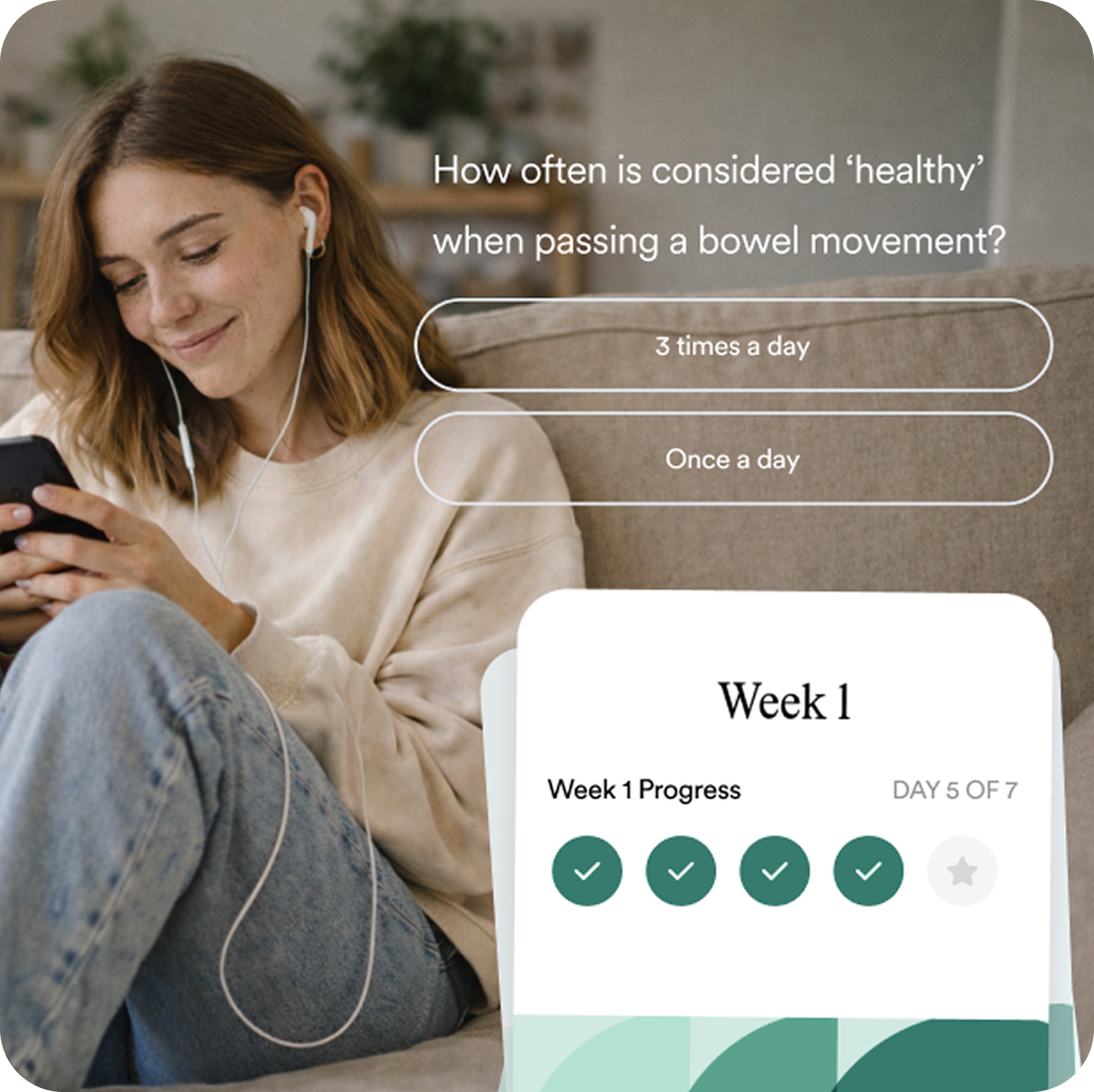


IBS, functional dyspepsia, functional constipation, and functional heartburn are now classified as gut-brain disorders - conditions driven by miscommunication between the gut and brain. The same gut-brain dysfunction also explains why many people with IBD continue to experience pain, constipation, or diarrhea even when their disease is in remission.
When the gut and brain fail to communicate properly, the body can misinterpret normal digestive processes as pain or discomfort. This heightened sensitivity, known as visceral hypersensitivity, can make the gut more reactive and contribute to gastrointestinal symptoms.


Nerva combines evidence-based gut-brain therapy techniques with real human support to help you self-manage symptoms, rebuild confidence, and get back to living fully.

The Nerva program was co-founded by Dr. Simone Peters, who ran a clinical trial with Monash University that found gut-brain therapy therapy worked just as well as the Low FODMAP diet in helping you participants well with and self-manage IBS.


Gut-brain therapy techniques targets the source of the problem: oversensitive nerves in the gut.

Gut-brain therapy techniques teaches you how to address this miscommunication between the gut and brain.

Gut-brain therapy techniques has been shown to help with constipation, diarrhea and mixed IBS.

Studies have shown gut-brain therapy techniques can help you achieve long-lasting IBS management.




Answer questions about you and your gut history to see if Nerva can work for you.

Daily gut-brain sessions, educational content, and goal oriented progress, tailored to your preferences.

Learn skills that can help you teach your brain to ignore false alarms from the gut triggered by food and stress.

Live the life you want, free from the control of digestive diseases.
.png)

Backed by 5+ studies including a randomized controlled trial.

9/10 members see meaningful progress in 4-6 weeks.

Learn skills focused on retraining the gut-brain axis.

Short daily sessions from the comfort of your home.

Reconfigure your preferred settings (such as Storage Controller Mode: is highly recommended for SSDs). Save and Exit ( F10 ). 🛠️ Troubleshooting Common Issues 1. The PC won't boot with new RAM after the update
Re-adjust your boot order, set your time/date, and ensure your SATA controller mode (AHCI/IDE) matches your previous setup.
Look at the main screen to verify that the matches the new version you downloaded. ms 7613 ver 11 bios update
If you have searched for the term (often typed with a space: ver 1.1), you are likely the owner of an aging but resilient desktop PC. This alphanumeric code refers to a specific motherboard often found in pre-built Hewlett-Packard (HP) desktops from the late 2000s and early 2010s, such as the HP Pavilion p6000 series, Compaq Presario CQ5000 series, or HP Pro 3000/3005 series.
Updating the BIOS is not a routine task and should only be performed if you are experiencing specific issues. Common reasons for updating the MS-7613 include: The PC won't boot with new RAM after
: While rare, BIOS updates carry risks. Back up any critical files before proceeding.
To modernize the MS-7613 Ver 1.1, a theoretical BIOS update could include the , a set of firmware-level enhancements designed to bridge the gap between 2010 hardware and 2026 software requirements. Key Enhancements This alphanumeric code refers to a specific motherboard
LGA 1156 (Supports Intel Core i3, i5, and i7 first-generation processors) Chipset: Intel H57 Express 2. Why Update the MS-7613 BIOS?
If you can tell me the (e.g., p6510f) and current BIOS version , I can try to help you locate the specific update file. Provide steps for troubleshooting a failed BIOS update.

"Hi, it's Alex, one of the founders of Nerva alongside Chris and Dr. Simone Peters.
We designed Nerva to help people with gut-brain disorders get back to a happy, normal life, free of flare-up worries. We're so proud of the fact that we've already helped over 300,000 people live better. Yet, we understand Nerva may not work for some people which is why we have a 100% money back guarantee.
If you finish your 6-week program and think Nerva hasn't helped you manage your symptoms, simply email support for a full refund of the Nerva program."
- Alex Naoumidis, Co-Founder and Co-CEO, Mindset Health


Based on studies that helped 3 in 4 people manage their gut symptoms.

15 minutes a day for 6 weeks. Short and relaxing sessions that fit with your schedule.

Discover helpful and calming flare-up exercises, like our deep breathing techniques.

Listen anytime and anywhere (home, office, couch, you name it).

Learn about gut-brain disorders with a range of easy to understand in-app articles.

Say bye to bots. We have real Nerva team members ready to help!
.svg)
.svg)


1) Anderson, Ellen J. BNutSci, MDiet1,2; Peters, Simone L. BSc (Psychophysiology) (Hons), PhD1; Gibson, Peter R. MBBS(Hons), MD1,2; Halmos, Emma P. BNutDiet, PGradDipBSc, PhD1,2. Comparison of Digitally Delivered Gut-Directed Hypnotherapy Program With an Active Control for Irritable Bowel Syndrome. The American Journal of Gastroenterology 120(2):p 440-448, February 2025. | DOI: 10.14309/ajg.0000000000002921 2) Peters, S. L., Yao, C. K., Philpott, H., Yelland, G. W., Muir, J. G., & Gibson, P. R. (2016). Randomised clinical trial: the efficacy of gut-directed hypnotherapy is similar to that of the low FODMAP diet for the treatment of irritable bowel syndrome. Alimentary pharmacology & therapeutics, 44(5), 447–459. https://doi.org/10.1111/apt.13706


